Elephants in Thailand face many challenges. Since the logging ban in 1989, many elephants lost their traditional work and have struggled to find a safe, healthy life. Some ended up in unregulated tourism, performing tricks or giving rides, often in harsh conditions.
At Chiang Mai Elephant Land, we believe every elephant deserves a life of care, respect, and freedom to roam. Our sanctuary gives them space to forage, socialize, and enjoy the forest, while educating visitors about the importance of ethical treatment and conservation. Visiting us is not just a chance to meet these incredible animals — it’s a way to support their well-being and future.

At the start of the 20th century, around 100,000 elephants roamed freely across Thailand. Over the decades, this number has dropped dramatically due to habitat loss, human activity, and the demands of logging and tourism. By the early 2000s, estimates put the population between 3,000 and 3,700, and some recent figures suggest it could be as low as 1,000.
Today, most elephants live in captivity, largely in tourism-related activities. While returning them to the wild isn’t feasible because much of their natural habitat has disappeared, there are ways to provide a better life for these incredible animals. Community-managed forests and ethical sanctuaries allow elephants to roam safely, forage naturally, and live with care and respect.
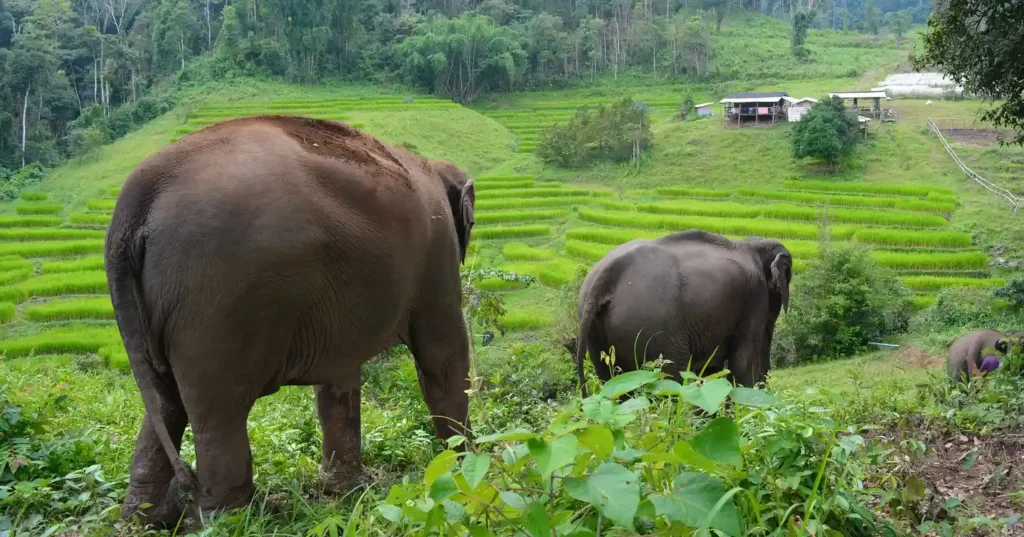
Many elephants in Thailand still face challenges from past tourism and logging practices. In unregulated camps, some were made to perform tricks, give rides, or work long hours, often under poor conditions. Awareness is growing, though, and education, particularly through social media, is helping these outdated practices become a thing of the past.
After the COVID-19 pandemic, many captive elephants returned to rural villages with their mahouts, giving them the chance to forage naturally. Now, ethical tourism is emerging, with community-managed forests providing safe spaces for elephants. These sanctuaries, often in collaboration with local communities like the Karen hill tribes, allow visitors to learn about elephants in an environment that respects both the animals and cultural traditions.
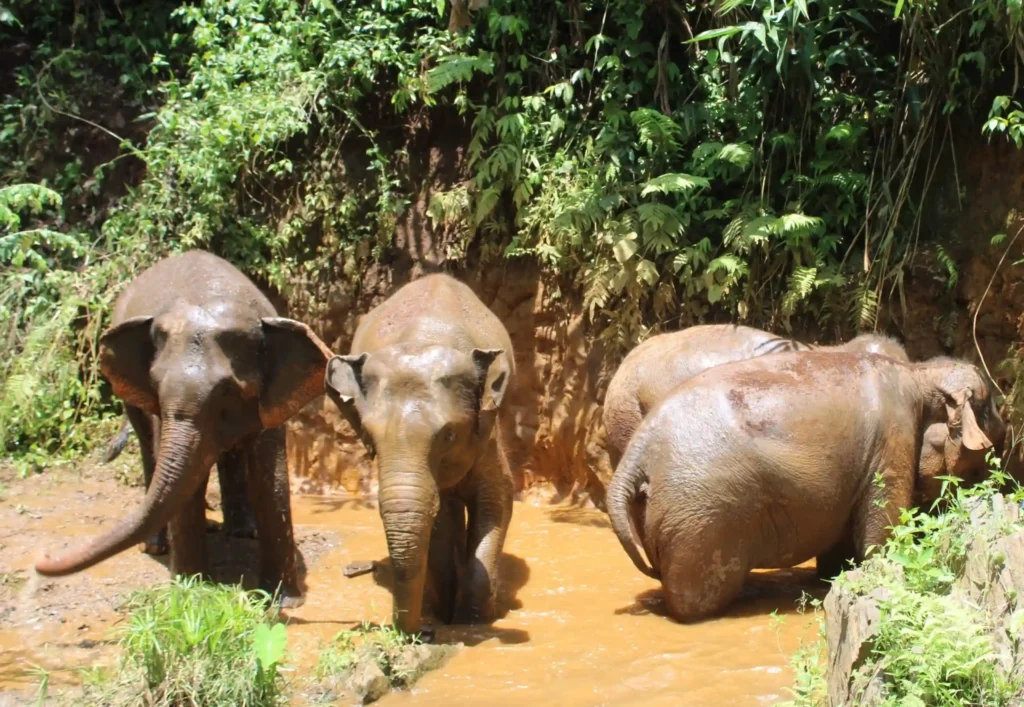
Elephants are highly intelligent and social animals. They form complex hierarchies within their herds, often based on family ties, and spend their time interacting, playing, exploring, and communicating with each other.
In the wild, elephants forage for a wide variety of plants, swim in rivers, and roam long distances each day. Even in captivity, it’s possible to provide a fulfilling life by allowing them to form herds, socialize, and play naturally. At Chiang Mai Elephant Land, our elephants enjoy space to roam, opportunities to forage, and plenty of interaction with the herd, ensuring both mental and physical well-being.
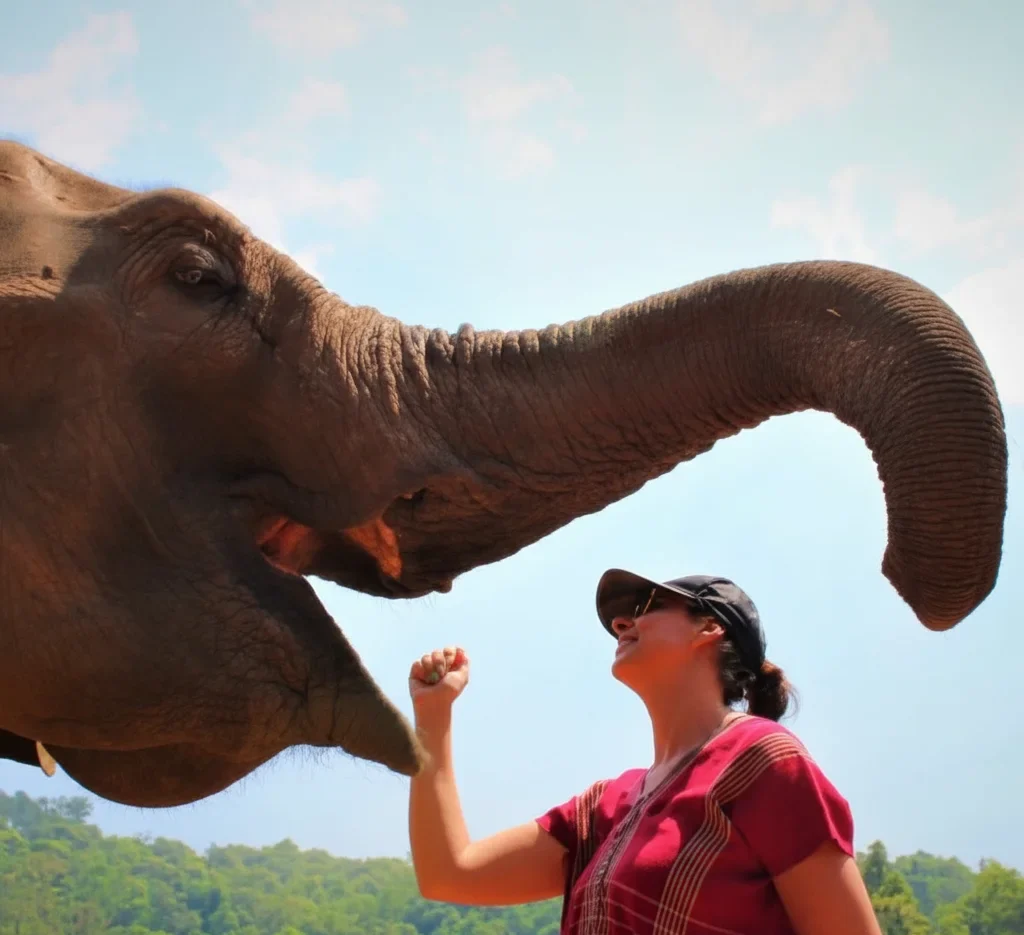
Elephants are gentle, intelligent, and social creatures with unique needs and behaviors. Learning about their lives helps us appreciate their complexity and the challenges they face in Thailand.
By understanding their history, behavior, and needs, we can support ethical care, conservation, and sanctuaries that prioritize the elephants’ well-being. Visiting Chiang Mai Elephant Land is a chance to connect with these incredible animals, see them thrive, and contribute to their protection for generations to come.

We’d love to hear from you. Whether you have questions about our tours, want help planning your visit, or simply wish to learn more about our elephants, our team is here to help.
You can reach us easily by email, phone, or through our contact form. We’ll get back to you as quickly as possible.
+66 (0)86 658 9122

Address:
Chiangmai Elephant Land 57 Kotchasarn Road, Changklan, Chiang Mai 50100 (Google Map)
Tel & WhatsApp: +66 (0)86 658 9122
Email: [email protected]
ChiangmaiElephantLand.com


